
"strictly in accordance with"
146000 article(s) found

How about Ugandan coffee beans? is Ugandan coffee black?
Professional coffee knowledge exchange more coffee bean information please follow the coffee workshop (Wechat official account cafe_style) front street-Uganda Coffee introduction Uganda, located in East Africa, across the equator, east of Kenya, south of Tanzania and Rwanda, west of the Democratic Republic of the Congo, north of South Sudan, with a total area of 241500 square kilometers. Most of the territory is located in the East African Plateau, lakes and flat.

Coffee beans are also divided into "aristocratic and poor classes". Evaluation of the quality of coffee
Coffee quality Evaluation Coffee producing countries have their own grading methods and quality evaluation standards in order to grade their harvested coffee, of course, there are also famous coffee mochas. Like Yemen in Matali, there are no countries with uniform export specifications and no coffee culture of the same style. If there are common evaluation criteria for coffee producers all over the world, it will be convenient for buyers.

A brief introduction to the cultivation of boutique coffee beans on Mount Everest in El Salvador, geographical location, climate and altitude
Like Guatemala and Costa Rica, coffee in El Salvador is graded according to altitude. The higher the altitude, the better the coffee. It is divided into three grades according to elevation: SHB (strictly high grown) = highlands, HEC (high grown central) = mid-highlands, and CS (central standard) = lowlands; the best brand is Pipil, which is Az.
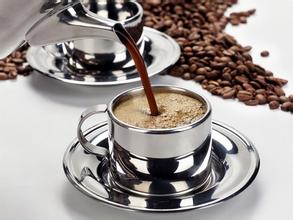
Boutique coffee Cubita Cuban Crystal Mountain Coffee
Cubita is Cuban coffee, which is mainly exported to Japan, France, Germany, Ireland, Canada and other countries. The cubita coffee entering the Chinese market is all selected from the pollution-free Crystal Mountain coffee beans in the high altitude areas of Cuba, which is a typical Caribbean coffee bean. All the granules of coffee beans are strictly selected according to the standard of sieve 17-19, and the selected coffee beans have large particles and high maturity.
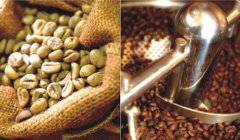
Basic screening of Coffee beans: a National system for screening and grading of Coffee beans
For the exchange of professional baristas, please follow the coffee workshop (Wechat official account cafe_style) Coffee bean screening and grading national system National Systems for Sorting and Grading Coffee clearly marked for different quality of coffee, such as Brazil, classified by coffee variety, or by shipping port name (such as Santos Santos, Parana Parana).
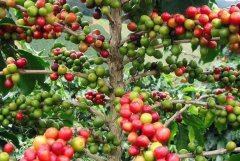
Coffee quality grading-- coffee bean grading high-grade coffee how to distinguish coffee bean quality
There is no internationally accepted standard for coffee quality grading, and the grading method varies from country to country. Therefore, coffee classification is based on some of the characteristics applicable to each producing country. The sample of coffee beans taken from a bag is judged according to the standards of the producing country, the samples are rated, and most of the coffee is good or bad according to the evaluation.

Guatemala Huasen coffee flavor description method taste grinding scale
Guatemala Flower God Coffee Flavor description processing method taste grinding scale Guatemala Hua Shen coffee beans are made by a well-known processing plant in Antigua, which is under the technical guidance of Raminita, a well-known coffee group brand. from the selection of raw beans to strict management and control, it also has excellent and stable quality. Another reason is that Guatemala is better than its
Knowledge about coffee raw beans classification and nomenclature of coffee in different countries
What exactly do G1, G2, G3, G4, AA, PB, SHB, SHG, EP and PLANTATION represent? The name of a coffee may contain messages such as country, producing area, variety, treatment, cup quality, bean order, bean shape or color, defect, raw bean density, etc. To really understand the naming of coffee, we must first understand the classification and classification of coffee. The grading of coffee

Characteristic flavor and taste of Ugandan coffee introduction to the taste of fine coffee beans in manor
Ugandan coffee beans have a unique flavor of delicate taste, which is very suitable for making Italian and other flavors of coffee. More importantly, Ugandan coffee beans are strictly screened according to the standards of the international market to ensure their high quality and pollution-free characteristics. Africa is the hometown of two major varieties of coffee, Arabica and Robusta, while the eastern Africa enjoys a plateau water hometown and a pearl of East Africa.

Introduction to the characteristics of Uganda Fine Coffee Bean Flavor Manor
Ugandan coffee beans have a unique flavor of delicate taste, which is very suitable for making Italian and other flavors of coffee. More importantly, Ugandan coffee beans are strictly screened according to the standards of the international market to ensure their high quality and pollution-free characteristics. Africa is the hometown of two major varieties of coffee, Arabica and Robusta, while the eastern Africa enjoys a plateau water hometown and a pearl of East Africa.

A brief introduction to the overall soft flavor and aroma characteristics of El Qomolangma boutique coffee beans
Like Guatemala and Costa Rica, coffee in El Salvador is graded according to altitude. The higher the altitude, the better the coffee. It is divided into three grades according to elevation: SHB (strictly high grown) = highlands, HEC (high grown central) = mid-highlands, and CS (central standard) = lowlands; the best brand is Pipil, which is Az.

Boutique Coffee beans famous Cuban Crystal Coffee introduces Caribbean Coffee
Cubita is Cuban coffee, which is mainly exported to Japan, France, Germany, Ireland, Canada and other countries. The cubita coffee entering the Chinese market is all selected from the pollution-free Crystal Mountain coffee beans in the high altitude areas of Cuba, which is a typical Caribbean coffee bean. All the granules of coffee beans are strictly selected according to the standard of sieve 17-19, and the selected coffee beans have large particles and high maturity.

Cuba Crystal Mountain Coffee Grinding characteristics Flavor description method Taste Manor introduction
Cubita adheres to the principle of perfect coffee, only makes individual coffee, the picking of coffee beans is done by hand, and all the particles of coffee beans are strictly selected according to the standard of sieve 17-19, plus washing coffee beans, to a large extent, remove defective beans and other impurities to ensure the quality of coffee. It has a high reputation in the coffee industry. Careful people will find that Cubita has a relationship with other people

Mild aromas Brazilian coffee Flavor description Treatment characteristics Variety Taste
Coffee production has gradually become a science since the introduction of coffee trees from Guyane française in 1720. Before 1990, the Brazilian government strictly controlled the coffee industry, with both severe interference and price protection measures, and the state has always implemented minimum price protection measures for farmers, resulting in coffee overproduction. Before World War II, surplus stocks amounted to 780

Description of Flavor by Grinding scale treatment of Coffee beans in Crystal Mountain, Cuba
Cubita adheres to the principle of perfect coffee, only makes individual coffee, the picking of coffee beans is done by hand, and all the particles of coffee beans are strictly selected according to the standard of sieve 17-19, plus washing coffee beans, to a large extent, remove defective beans and other impurities to ensure the quality of coffee. It has a high reputation in the coffee industry. Careful people will find that Cubita has a relationship with other people

What is the density of very hard coffee beans? coffee beans are soft and hard and the size of powder grains.
Professional coffee knowledge exchange more coffee bean information Please pay attention to the coffee workshop (Wechat official account cafe_style) hard beans (Hard Bean HB) and soft beans (Soft Bean SB) are the two simplest words to describe the density of coffee beans. They are within the range of very hard beans (strictly hard bean SHB) and very soft beans (strictly soft bean SSB). No.

Starbucks will impress Haikou coffee fans with "human feelings"
Starbucks will impress Haikou coffee fans with the service concept of providing each customer with a unique Starbucks experience. Haikou Starbucks attracted a large number of admiring customers a week after its opening. How can Haikou Starbucks quickly build a communication bridge with its customers? According to reports, Starbucks' success in China and the world is not only because of what it has mentioned.

Description of Flavor of Coffee beans in Crystal Mountain of Cuba; introduction to the taste of varieties treated by grinding scale
The raw beans of Cubita coffee are selected from the pollution-free Crystal Mountain coffee beans in the high altitude area of Cuba. The particles of coffee beans are strictly selected according to the standard of sieve 17-19. The selected coffee beans have large particles and high maturity. Cubita coffee beans are all picked by hand, using water washing refining method to remove defective beans and other impurities to the maximum extent, plus experienced baking

Introduction to the taste of noble and tender Cuban crystal coffee
Cubita is Cuban coffee, which is mainly exported to Japan, France, Germany, Ireland, Canada and other countries. The cubita coffee entering the Chinese market is all selected from the pollution-free Crystal Mountain coffee beans in the high altitude areas of Cuba, which is a typical Caribbean coffee bean. All the granules of coffee beans are strictly selected according to the standard of sieve 17-19, and the selected coffee beans have large particles and high maturity.

A brief introduction to the planting Market Price of Brazilian Hillado Fine Coffee Bean
Brazil is vividly compared to the giant and monarch of the coffee world. There are about 3.97 billion coffee trees there, and small farmers now grow 75% of Brazil's total coffee production. The number of coffee producers in Brazil is twice or even three times that of Colombia, the second largest coffee producer in the world. Unlike in the past, Brazil's economy is now less dependent